
Project Dorsal focuses its research initiatives on highly migratory threatened species, and on individuals that are indicators of localized ecosystem health. Our initiatives implement non-traditional, innovative methodologies that are as minimally invasive as possible in order to ultimately affect policy and ensure marine ecosystem health.
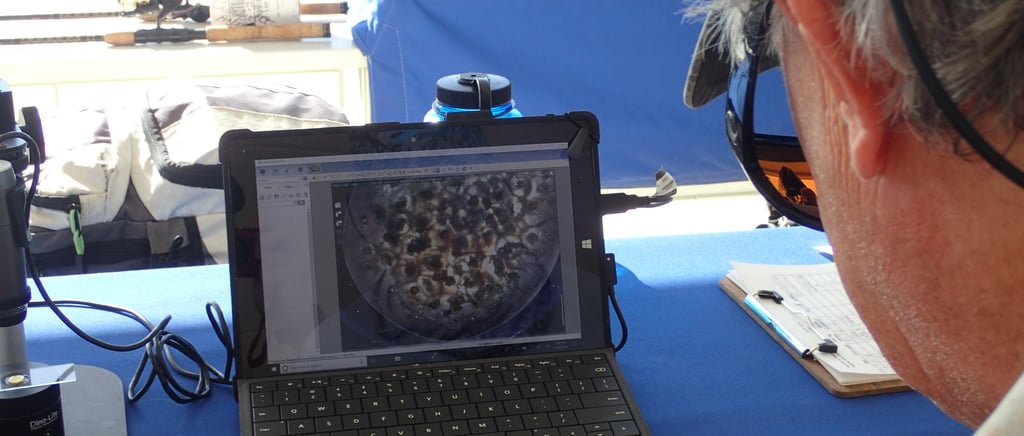
Involving the public and cooperating with local stakeholders as a means of data collection is a core value and a necessity in order to maximize our impact.
Maryland's Chesapeake Sharks
Inshore protected areas are widely considered to be essential habitats for sharks and other important gamefish species. Here, they can grow and remain relatively protected until large enough to move to deeper, more open waters. Recent declines in populations of gamefish and coastal shark species have underscored the need to study the conservation ecology of these fish, now more than ever, with over 75% of the world's population expected to live in coastal regions by the year 2025.
Our approach is to conduct the first-ever dedicated shark research initiative in Maryland's Chesapeake Bay, the world's second-largest estuary. Remaining true to our mission, we have cooperated extensively with local watermen and fishing guides to identify specific areas within this estuary where higher incidences of shark sightings or incidental landings have occurred. Analysis of stakeholder video footage, photos, and subsequent interviews has led us to believe the species of shark in question is the IUCN-endangered Sandbar Shark, which has declined by an estimated 50-79% in U.S. waters over the last century, and has been known to frequent Virginia's Chesapeake Bay.
To explore this possibility, this study will use passive acoustic telemetry and the least invasive methodologies possible to monitor the movements and habitat use of juvenile Sandbar Sharks within Maryland's Chesapeake Bay. This initiative has several main goals.
Identify the first-ever Sandbar Shark movements and habitat use in Maryland's Chesapeake Bay.
Collect data to help delineate a possible Sandbar Shark nursery ground in Maryland waters.
Contribute data to help mitigate human-shark interactions with actively hooked fish (depredation).
Investigate the role this species may be having on commercially and recreationally important blue crab and gamefish (e.g., striped bass, bluefish, etc.).
We encourage public involvement and cooperation as much as possible with this initiative, and local stakeholder cooperation is essential in order to accomplish our research mission.
If you believe you have seen a shark in the Maryland portion of the Chesapeake Bay, we want to hear from you. Please fill out the form below!
Pelagic Sharks
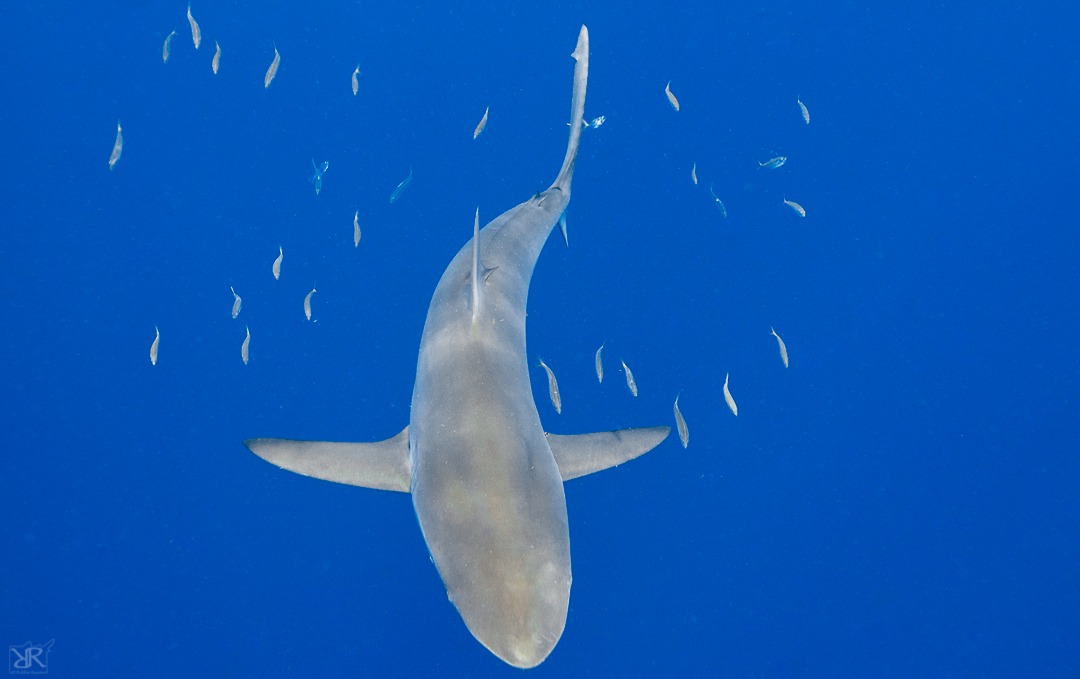
Over three-quarters of open ocean shark species have a heightened risk of extinction. Because of the natural absence of food in the open ocean, pelagic sharks must be curious by nature. While this behavior makes these species a favorite of tourism operations, it renders these individuals especially vulnerable to commercial fishing bycatch. With such high mortality rates and slow population growth, pelagic shark populations have drastically declined.
Pelagic sharks are known to make very long-distance migrations and are difficult to locate on a consistent, regular basis. Because of this, information on their movements, physiology, and their interactions with fishing efforts and tourism operations remain largely unknown.
Our approach is to cooperate with a local eco-tourism operation, Shark Tours Florida in order to locate, and sample two enigmatic pelagic shark species: the silky shark and the dusky shark. This operation has found a location and time where these two species can be regularly encountered for a short period every year. We plan on utilizing acoustic telemetry technology and acoustic tags to examine the behavior and movements of these species in relation to eco-tourism operations and recreational fishing activity. We also plan on collecting blood from these species in-situ (free-swimming) in order to understand the baseline level of stress of these two species. We can then correlate these baseline levels to sharks that have been incidentally captured in recreational fisheries to measure increased stress levels.
We encourage the public to join us on every planned research expedition, as they will play a vital, active role in gathering scientific data while researchers are conducting more directed sampling methodologies. These roles will include:
Gathering length information of individuals via laser-camera devices ("photogrammetry").
Collecting data on sex and size-class aggregation.
Taking photos of identifying features of individuals for photo-ID software and repository.
Project Dorsal, Inc
A nonprofit, tax-exempt charitable orginization under Section 501(c)(3) of the Internal Revenue Code
Currently operating in:
Port St. Lucie, Florida, USA & Annapolis, Maryland, USA
contact@projectdorsal.org